
The collection of local knowledge documents has been in progress since the foundation of the library in 1952.
The special collection contains documents related to the past (until 1920) and present of the historical counties of Abaúj, Borsod, Gömör, Torna and Zemplén. We collect publications with local content, published locally and produced in local printers, as well as works of local authors, regardless of type. Books, periodicals, small prints, general assembly records, thesis papers, audio-visual documents can be found here. From a printing history point of view, we collect local printing products until 1948. in addition to the books currently published, works from all ages – if local? – we try to get it, so we also monitor the offer of book auctions.
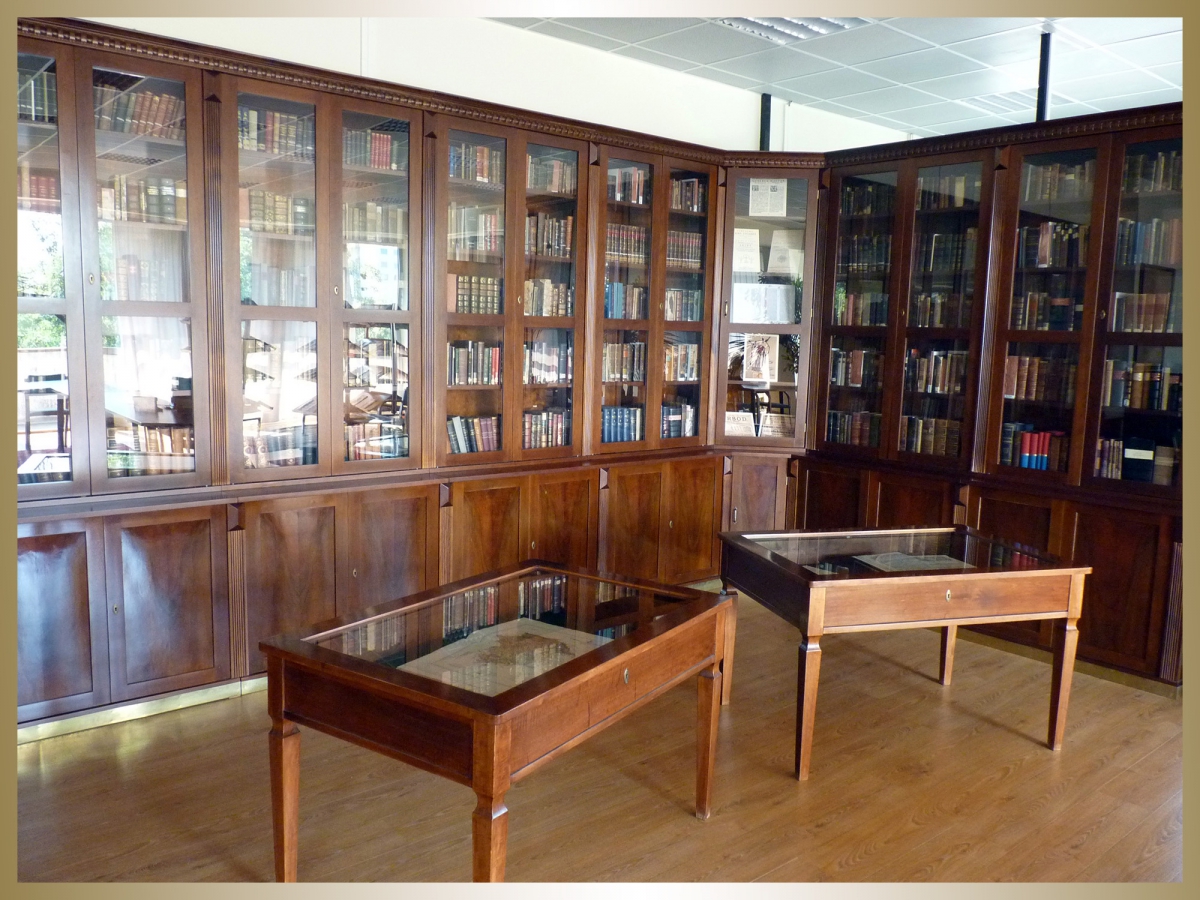
In the reading space on the 2nd floor there are books, newspapers, periodicals, thesis, maps, postcards and photos, as well as CDs and DVDs, computer documents, microfilms and digital versions of some of them. The collection of postcards from the Local History Collection is very rich, consisting of about 10,000 pieces. For example, the oldest postcard from 1899 is a rarity, since the publication of postcards in Hungary started in 1896.
The central warehouse housed small prints and posters, as well as some of the bound journals.
Librarians have been monitoring the press since 1956. The writings of local authors and the data of articles dealing with local topics were initially revealed in the regular and professional article catalogue. Nowadays we keep the results of the press monitoring, the articles related to the county and the city in the electronic catalogue, which have been archived in the last few years already digitized.
Materials uploaded to the Hungarian National Digital Archive (MaNDA)
In addition to collecting local knowledge documents and information, today Borsod-Miskolc Digital Library The Local Knowledge Collection is also responsible for increasing its stock, selecting works for digitisation, managing the digitisation workflow, ensuring the accessibility and updating of electronic content, and archiving local recordings.